2009 AMC 12A Problem 11
Problem 11 of 25IntermediateAlgebra
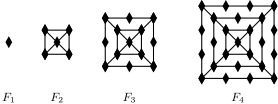
The figures and shown are the first in a sequence of figures. For is constructed from by surrounding it with a square and placing one more diamond on each side of the new square than had on each side of its outside square. For example, figure has diamonds. How many diamonds are there in figure
Answer choices
Show solution
Solution
The outside square of has more diamonds than that of and the outside square of has so the outside square of has diamonds.
Adding all the rings,
For this is
Thus, the correct answer is E.
Tagged: arithmetic sequence · summation