2025 AMC 10A Problem 19
Problem 19 of 25HarderAlgebraNumber TheoryProblem-Solving Techniques
An array of numbers is constructed beginning with the numbers in the top row. Each adjacent pair of numbers is summed to produce a number in the next row. Each row will begin and end with the numbers and respectively. The first three rows are shown below.
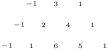 If the process continues, one of the rows will sum to In that row, what is the third number from the left?
If the process continues, one of the rows will sum to In that row, what is the third number from the left?Answer choices
Show solution
Solution
Each interior entry feeds two entries below, and the end values and cancel in the sum. So every row’s total doubles the one above. The top row sums to and so this is the th row (counting the top as row ). Track the diagonals from the left. The second diagonal is dropping by each row. The third diagonal adds these up: for it equals Plug in : Thus, A is the correct answer.
Tagged: recursion · triangular number · pattern recognition