2021 AMC 10A Problem 12
Problem 12 of 25IntermediateGeometry
Two right circular cones with vertices facing down as shown in the figure below contain the same amount of liquid. The radii of the tops of the liquid surfaces are cm and cm. Into each cone is dropped a spherical marble of radius cm, which sinks to the bottom and is completely submerged without spilling any liquid. What is the ratio of the rise of the liquid level in the narrow cone to the rise of the liquid level in the wide cone?
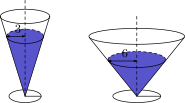
Answer choices
Show solution
Solution
Let the initial liquid heights in the narrow and wide cones be and Since the liquid volumes are equal,
so
After the identical marbles are dropped in, each cone must contain the same final volume below the liquid surface: the original liquid volume plus the volume of one marble. If the new liquid-surface radii are and similarity gives new heights and Thus
Using this simplifies to so The rise ratio is therefore
Thus, E is the correct answer.
Tagged: cone · similarity · volume